


Hotel stays are generally safe, but a few practical precautions can make a meaningful difference. Whether you’re traveling for business or leisure, understanding basic hotel safety tips helps reduce risk and adds peace of mind.
Small habits—often overlooked—can prevent common issues like theft, unauthorized entry, or misplaced belongings.
Choosing a Safe Hotel Before You Book

Safety starts before you even arrive. The location, reputation, and basic security features of a hotel all play a role.
Consider the following:
- Check recent guest reviews
Look for comments about security and staff responsiveness - Choose well-lit locations
Areas with visible activity tend to be safer - Look for key security features
24-hour front desk, surveillance cameras, and secure entry points - Avoid isolated properties if unfamiliar with the area
A little research upfront can help avoid unnecessary complications later.
Smart Check-In and Room Selection Habits
Once you arrive, your decisions at check-in can affect your overall safety.
- Request a room above the ground floor
But not too high—mid-level floors are often preferred - Avoid sharing your room number aloud
Keep it discreet when receiving your key - Observe staff professionalism
A well-managed front desk is a good sign - Ask about emergency exits nearby
These small steps help establish awareness from the start of your stay.
Hotel Room Safety Essentials
| Safety Practice | Why It Matters |
|---|---|
| Lock doors and use deadbolts | Prevent unauthorized entry |
| Use door viewers before opening | Verify who is outside |
| Secure windows and balconies | Reduce access points |
| Store valuables safely | Minimize theft risk |
| Keep emergency contacts handy | Quick response if needed |
Pro Insight
A frequent traveler once noticed a knock on their hotel room door late at night from someone claiming to be staff. Instead of opening immediately, they called the front desk to verify the request.
The hotel confirmed no staff had been sent.
Situations like this are uncommon—but when they do happen, pausing to verify can prevent unnecessary risk.
Protecting Your Belongings
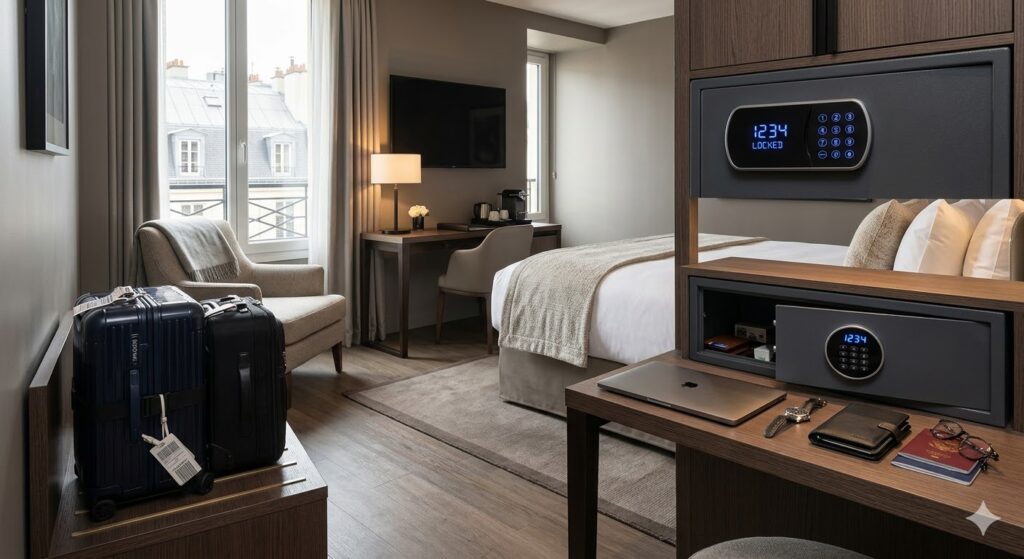
Keeping your items secure doesn’t require complicated steps.
- Use the in-room safe for important items
- Avoid leaving valuables in plain sight
- Keep bags zipped and organized
- Carry essential documents when possible
Even in secure hotels, simple precautions reduce the chance of loss.
Quick Tip
Place the “Do Not Disturb” sign on your door when you’re out. It can discourage unnecessary room access and signal that the room is occupied.
Staying Safe in Common Areas
Hotel safety isn’t limited to your room.
Be mindful when using shared spaces:
- Avoid leaving belongings unattended
- Be cautious when connecting to public Wi-Fi
- Stay aware in parking areas and elevators
- Limit sharing personal details with strangers
Maintaining awareness in these areas helps prevent avoidable situations.
Emergency Awareness and Preparedness
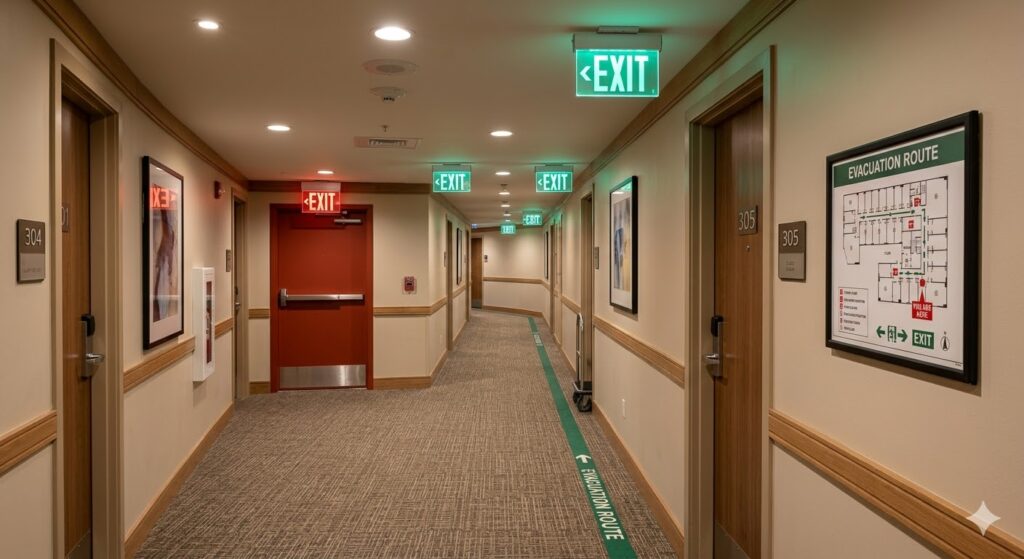
Knowing what to do in an emergency is just as important as prevention.
- Locate emergency exits upon arrival
- Review evacuation maps posted in your room
- Keep your phone charged
- Know how to contact the front desk quickly
Preparedness doesn’t take long, but it can make a difference when needed.
Frequently Asked Questions
Are hotels generally safe for travelers
Yes, most hotels are safe, especially reputable ones, but basic precautions are still important.
Should I use the hotel safe
It’s a practical option for storing valuables, though not entirely risk-free.
Is it safe to open the door for hotel staff
Always verify with the front desk before opening if you’re unsure.
What floor is safest in a hotel
Mid-level floors are often preferred for both accessibility and reduced risk.
How can I protect myself when traveling alone
Stay aware, avoid sharing personal details, and follow basic safety habits consistently.
Conclusion
Hotel safety doesn’t require extreme measures—just thoughtful awareness and simple routines. From choosing the right property to securing your room and belongings, each step contributes to a more comfortable and secure stay.
A few mindful habits can go a long way in helping you focus on your trip rather than potential risks.
Trusted U.S. Resources
https://www.usa.gov/travel
https://www.travel.state.gov
https://www.cdc.gov/travel
https://www.ready.gov
This article is for general informational purposes only and does not provide legal, financial, medical, or professional advice. Policies, rates, and regulations may change over time.