

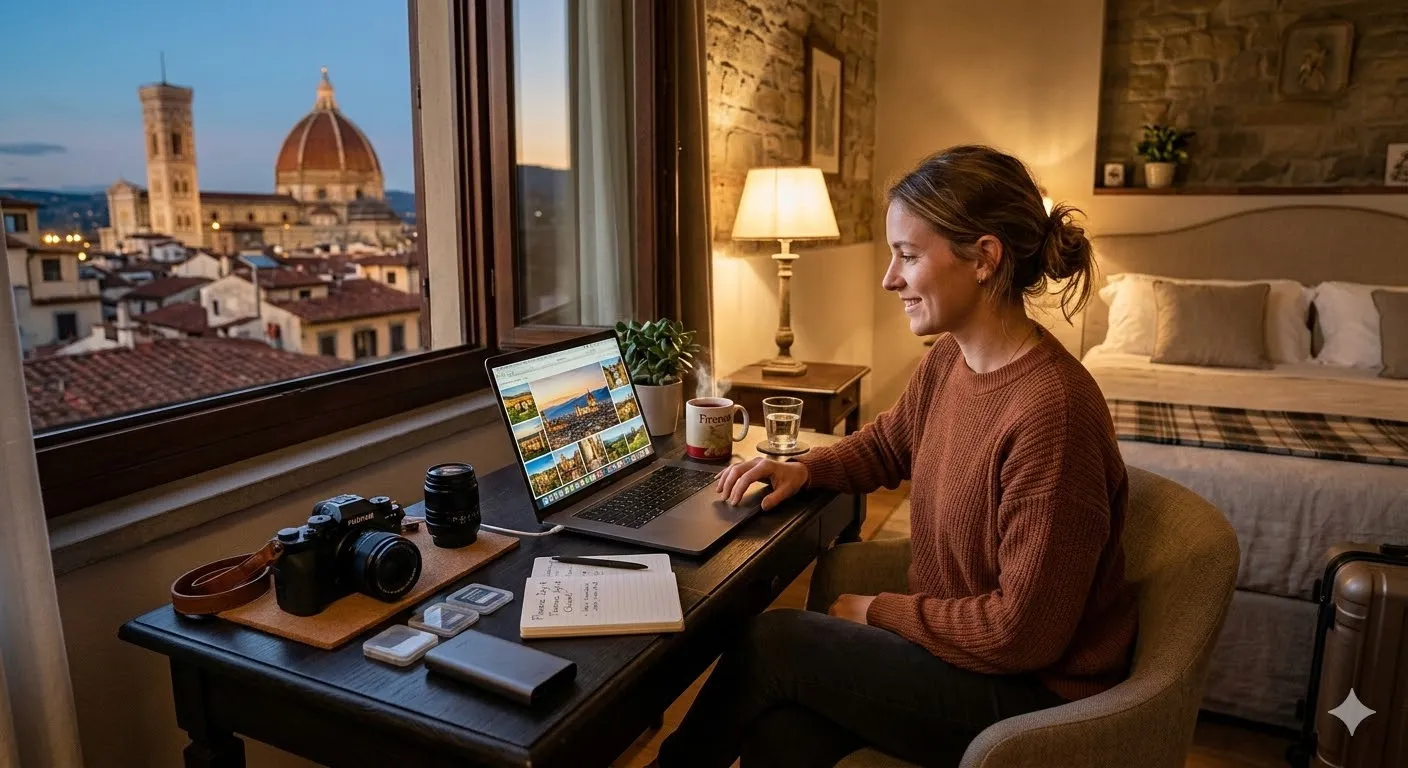
Travel photography tips often sound simple on paper, yet the difference between a snapshot and a meaningful image usually comes down to small decisions made in the moment. Lighting, timing, and perspective all shape how a place is remembered through a photograph.
For travelers who want more than casual phone photos, learning a few practical techniques can dramatically improve results. Good travel photography isn’t about expensive gear or complex settings. It’s about awareness, patience, and understanding how a scene naturally unfolds.
The following insights highlight techniques photographers often rely on when documenting landscapes, cities, and everyday life during a journey.
Understand the Light Before You Shoot
Light defines mood, depth, and clarity in photography. While travel often limits control over timing, recognizing how natural light behaves can transform an ordinary scene.
Early morning and late afternoon — commonly known as the golden hours — produce softer shadows and warmer tones. Midday light tends to be harsher, especially in open areas, but it can still work well for architecture or vibrant markets.
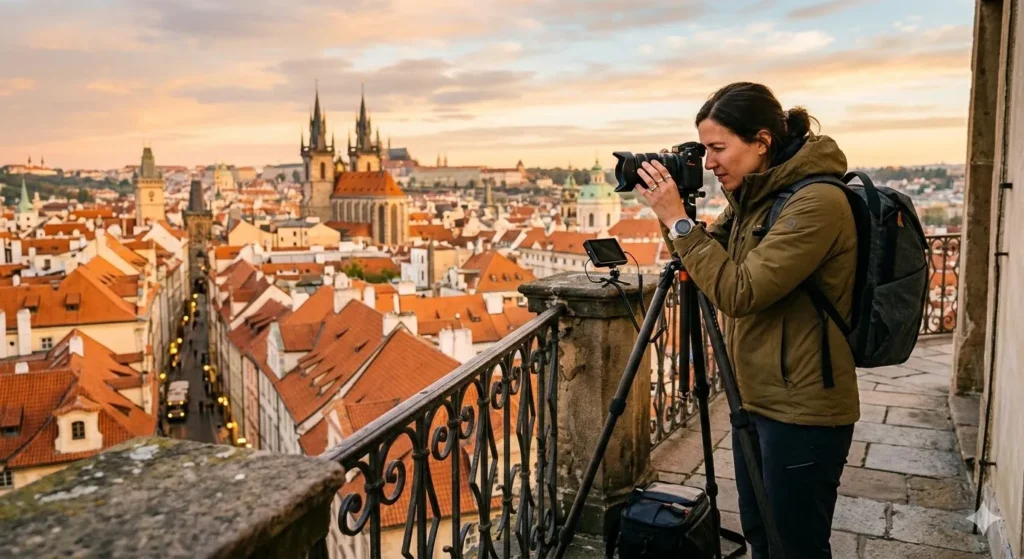
Rather than rushing through a location, many experienced photographers pause to observe how the light moves across buildings, streets, or landscapes.
Even subtle shifts can change the entire look of an image.
Composition Techniques That Improve Travel Photos
Composition guides the viewer’s attention. Without it, even beautiful destinations can appear visually cluttered.
A few commonly used composition approaches include:
• Rule of thirds – placing key elements slightly off center
• Leading lines – roads, bridges, or pathways guiding the eye
• Framing – using doorways, windows, or arches to highlight a subject
• Layering – foreground, middle, and background elements creating depth
Small adjustments often make a noticeable difference.
Consider a simple example: a traveler photographing a street café in Lisbon. Standing directly in front might produce a flat image. Taking two steps to the side could reveal the café framed by an old doorway with a distant hill in the background.
The scene suddenly tells a story.
Essential Camera Settings for Travel Photography
While modern cameras and smartphones automate many functions, understanding a few basic settings provides more control in varied environments.
| Setting | What It Controls | Typical Travel Use |
|---|---|---|
| Aperture | Depth of field | Landscapes or portraits |
| Shutter Speed | Motion capture | Street scenes or moving subjects |
| ISO | Sensor sensitivity | Low-light environments |
| White Balance | Color temperature | Indoor lighting or sunsets |
Many travelers rely on aperture priority mode, which allows the camera to automatically adjust shutter speed while the photographer controls depth of field.
This approach works well when conditions change quickly.
Pro Insight
Professional travel photographers often focus less on landmarks and more on everyday moments.
A quiet alley, a street vendor preparing food, or commuters crossing a bridge can convey the character of a place more effectively than a well-known monument.
For instance, someone visiting Kyoto might photograph temples during the day but discover that the most memorable images appear at dusk when lanterns begin to glow and locals pass through narrow streets on their way home.
Those unscripted scenes frequently carry the strongest visual storytelling.
Capturing People Respectfully While Traveling
People add life and context to travel photography, but photographing strangers requires sensitivity.
A few practical guidelines help maintain respect:
• Make eye contact before taking a close portrait
• Use a longer lens to avoid invading personal space
• Show appreciation if someone agrees to be photographed
• Avoid photographing individuals in vulnerable situations
Cultural expectations can vary widely from place to place. Observing how locals interact with cameras often provides helpful cues.
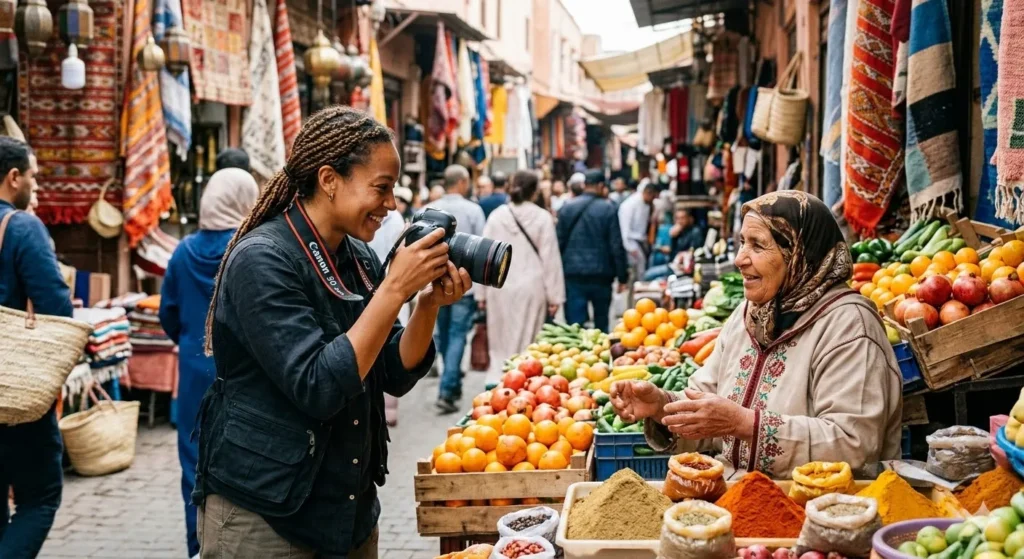
Authentic expressions often appear when the photographer spends a few minutes observing before taking the photo.
Planning Shots Without Overplanning
Preparation can help travelers recognize interesting photography opportunities, but rigid schedules sometimes prevent spontaneous discoveries.
Instead of planning every shot, many photographers research:
• sunrise and sunset times
• notable viewpoints
• seasonal conditions
• local events or festivals
After that, they remain flexible.
Some of the most compelling images happen unexpectedly — like a sudden rainstorm reflecting city lights or fog drifting through mountain valleys.
Quick Tip
When arriving in a new location, take a few minutes to photograph the same scene from several angles.
Step closer, move lower, or shift slightly to the side. This simple habit often reveals compositions that weren’t obvious at first glance.
Even a small perspective change can dramatically improve the final image.
Protecting and Organizing Photos While Traveling
Travel photography produces a large number of files quickly. Losing those images can be frustrating, especially during longer trips.
Many photographers follow a simple workflow:
• Back up images to a portable drive each evening
• Use cloud storage when internet access allows
• Organize folders by location or date
• Review photos periodically to identify strong shots
A traveler spending two weeks exploring national parks, for example, might store photos by park name and shooting day. This structure makes later editing far easier.
Frequently Asked Questions
What camera is best for travel photography?
The best camera is often the one that balances image quality with portability. Many travelers choose mirrorless cameras or high-quality smartphones because they are lightweight and easy to carry throughout the day.
Is a tripod necessary for travel photography?
Tripods are useful for night photography, long exposures, and landscape shots. However, many travelers rely on compact travel tripods or stable surfaces such as walls or benches when packing space is limited.
How can beginners improve travel photography quickly?
Practicing composition, paying attention to light, and taking multiple shots from different angles can quickly improve results. Reviewing photos after each day also helps identify what worked well.
Should travelers edit their photos?
Light editing can improve exposure, color balance, and contrast. The goal is usually subtle enhancement rather than dramatic alteration.
What time of day is best for travel photos?
Early morning and late afternoon generally provide the most flattering light. These times also tend to have fewer crowds at popular destinations.
Conclusion
Strong travel photography rarely depends on expensive equipment or complicated techniques. Instead, it grows from observation, patience, and an understanding of how light and composition shape a scene.
Travelers who slow down, pay attention to everyday moments, and experiment with perspective often come home with images that feel far more personal than typical tourist snapshots.
Photography, at its core, is simply a way of noticing the world more carefully.
Trusted U.S. Resources
https://www.nps.gov
https://www.si.edu
https://www.loc.gov
https://www.usa.gov
This article is for general informational purposes only and does not provide legal, financial, medical, or professional advice. Policies, rates, and regulations may change over time.