


Choosing where to stay is one of the most important decisions travelers make when planning a trip. The choice between a hotel and a hostel often comes down to budget, privacy preferences, and the kind of travel experience someone wants.
Hotels have traditionally served travelers looking for comfort and privacy, while hostels are known for affordability and social environments. Both accommodation types can work well depending on the traveler’s needs, trip length, and expectations.
Understanding the differences through a clear hotel vs hostel comparison can help travelers select the option that fits their priorities.
What Defines a Hotel Stay

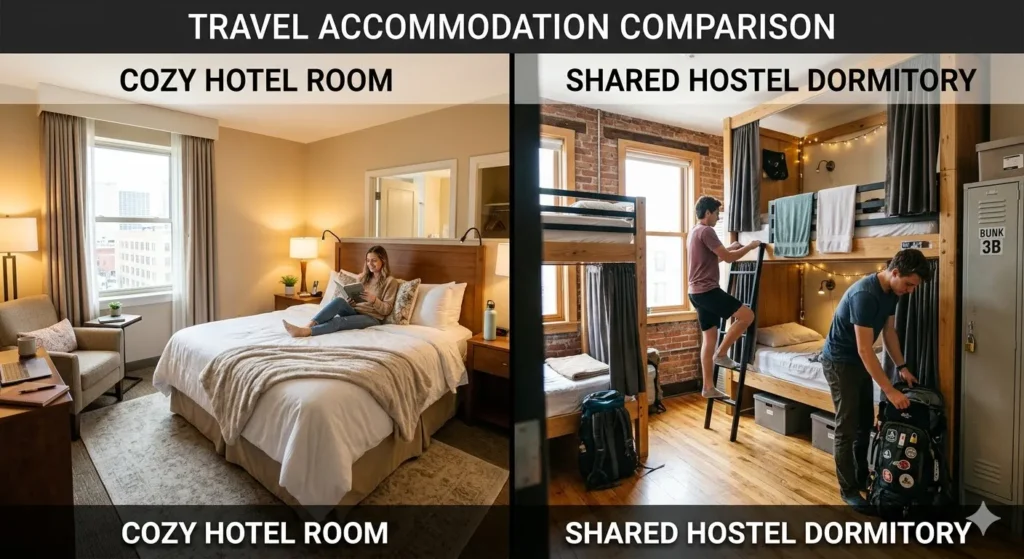
Hotels are commercial lodging establishments that typically offer private rooms, dedicated bathrooms, and a range of hospitality services. These accommodations vary widely in price and style, from basic budget hotels to luxury resorts.
Guests usually book individual rooms and have exclusive access to their space during their stay. Many hotels also provide additional amenities designed to enhance comfort.
Common hotel features include:
Private bedrooms and bathrooms
Daily housekeeping services
Room service or on-site dining
Reception staff available throughout the day
Because hotels focus heavily on convenience and comfort, they often appeal to families, business travelers, and people seeking quiet and privacy.
Hotel vs Hostel Comparison
When travelers compare hotels and hostels, several factors typically shape the decision. These include cost, privacy, available amenities, and the social environment.
| Feature | Hotel | Hostel |
|---|---|---|
| Room Privacy | Private rooms with private bathrooms | Shared dormitory rooms or limited private rooms |
| Price Range | Generally higher cost per night | Often more affordable |
| Social Environment | Usually quiet and private | Social and community-oriented |
| Amenities | Housekeeping, room service, concierge | Shared kitchens, lounges, group activities |
| Ideal Traveler | Families, business travelers, couples | Budget travelers, backpackers, solo travelers |
Each accommodation type offers advantages depending on travel goals and personal preferences.
Pro Insight
Many travelers assume hostels are only for very young backpackers, but modern hostels increasingly cater to a wider range of guests. Some offer private rooms, coworking spaces, and organized local tours.
As a result, the difference between hotels and hostels has become more flexible in recent years.
What Makes Hostels Different

Hostels are designed to provide affordable accommodation while encouraging interaction among travelers. Instead of individual rooms for each guest, hostels often feature shared dormitories with multiple beds.
Shared facilities are common and may include communal kitchens, bathrooms, and common areas.
Hostel environments typically emphasize community. Guests often gather in shared spaces where they can meet other travelers, exchange travel advice, or join group activities.
Because of the lower cost structure, hostels are frequently popular among:
Solo travelers
Students and backpackers
Long-term travelers
People exploring multiple destinations
Many hostels also organize walking tours, social events, or shared dinners to help guests connect.
Quick Tip
If privacy is important but budget is limited, look for hostels that offer private rooms. Many modern hostels provide this option while still maintaining the social atmosphere that hostels are known for.
When a Hotel Makes More Sense
Hotels often provide advantages in situations where comfort and convenience take priority.
For example, a family traveling with children may prefer the quiet environment and private amenities offered by a hotel room. Business travelers might also appreciate hotel services such as conference rooms, reliable Wi-Fi, and on-site dining.
Hotels can also be more suitable for short stays where travelers simply need a comfortable place to rest between activities.
A Real-World Scenario
Consider two travelers visiting the same city.
One traveler is on a backpacking trip across several countries and wants to meet other travelers while keeping expenses low. A hostel provides shared accommodation and social activities that match this style of travel.
Another traveler is visiting for a professional conference and needs a quiet workspace, reliable services, and private accommodations. In this case, a hotel offers the comfort and convenience required for the trip.
Both options serve different travel priorities.
Frequently Asked Questions
Are hostels always cheaper than hotels
Hostels are generally more affordable because they often offer shared rooms and communal facilities.
Do hostels offer private rooms
Many hostels now offer private rooms, though they may still share common spaces such as kitchens or lounges.
Are hotels safer than hostels
Both hotels and hostels typically implement safety measures such as reception desks, security cameras, and key access systems.
Who usually stays in hostels
Hostels commonly attract backpackers, solo travelers, students, and people seeking social travel experiences.
Can families stay in hostels
Some hostels offer family rooms or private accommodations that may be suitable for families.
Conclusion
The hotel vs hostel comparison ultimately comes down to travel style and priorities. Hotels provide privacy, comfort, and full-service hospitality, while hostels focus on affordability and social interaction among travelers.
Both accommodation types serve valuable roles within the travel industry. By considering factors such as budget, desired level of privacy, and interest in meeting other travelers, individuals can select the option that best fits their trip.
https://www.usa.gov/travel
https://travel.state.gov
https://www.nps.gov
https://www.transportation.gov
This article is for general informational purposes only and does not provide legal, financial, medical, or professional advice. Policies, rates, and regulations may change over time.